Birmingham’s muggy summers and unpredictable winter storms put serious stress on aging windows. If you’re noticing condensation between panes, drafts near the sills, or climbing energy bills, it’s probably time for new windows. Window replacement isn’t just about curb appeal, it’s about comfort, energy efficiency, and protecting your home from Alabama’s climate extremes. This guide covers everything Birmingham homeowners need to know: realistic cost breakdowns, the best window types for our region, contractor vetting tips, and when DIY makes sense (spoiler: not often). Whether you’re tackling one problem window or planning a whole-house upgrade, here’s what you need to make a smart choice.
Table of Contents
ToggleKey Takeaways
- Window replacement in Birmingham addresses energy loss, moisture damage, and storm protection while recouping 70–80% of investment at resale.
- Double-pane low-E windows with argon gas fill and a U-factor of 0.30 or lower are ideal for Climate Zone 3’s hot, humid summers and can reduce cooling costs by 15–25% annually.
- A typical whole-house window replacement in Birmingham costs $8,000–$15,000 for quality vinyl options, with federal tax credits covering up to 30% ($600 annually) for ENERGY STAR-certified units.
- Professional installation is strongly recommended for most projects, especially full-frame replacements, because improper flashing is the #1 cause of water intrusion and structural damage.
- Vinyl and fiberglass frames outperform aluminum and wood in Birmingham’s humid climate, while double-hung windows offer the easiest retrofit but casement windows provide 100% ventilation and better weathersealing.
Why Birmingham Homeowners Choose Window Replacement
Most Birmingham homes built before 2000 still have their original windows, single-pane glass with aluminum frames that sweat in summer and leak air in winter. Here’s why homeowners across Jefferson County are upgrading:
Energy loss. Single-pane windows offer almost zero insulation value. When your HVAC system fights 90°F heat and 80% humidity from June through September, inefficient windows can account for 25–30% of cooling costs. Double-pane low-E glass with argon or krypton gas fill cuts heat transfer significantly.
Moisture and rot. Birmingham’s average annual rainfall hovers around 54 inches. Old wood frames swell, warp, and rot. Aluminum frames develop condensation that drips onto sills and walls, leading to mold and structural damage behind the trim.
Storm protection. Severe weather isn’t rare here. Impact-resistant windows or laminated glass add a layer of protection during high winds and hail events, which can lower insurance premiums in some cases.
Resale value. Updated windows are a top-five feature buyers look for. According to national remodeling cost-vs-value data, window replacement alabama projects typically recoup 70–80% of the investment at resale, especially in neighborhoods where curb appeal matters.
Noise reduction. If you live near I-20/59 or under a Birmingham-Shuttlesworth flight path, dual-pane windows with laminated glass can drop interior noise levels by 20–35 decibels.
Understanding Window Replacement Costs in Birmingham AL
Pricing varies widely based on window type, frame material, glass package, and installation complexity. Here’s what Birmingham homeowners should budget in 2026:
Vinyl double-hung windows (the most common choice): $400–$700 per window installed. Vinyl frames resist moisture, require zero maintenance, and handle humidity well, ideal for our climate.
Wood-clad windows (wood interior, aluminum or vinyl exterior): $700–$1,200 per window installed. These offer a traditional look inside with weather-resistant exteriors.
Fiberglass windows: $600–$1,000 per window installed. Strongest frames, best dimensional stability in temperature swings, but fewer style options.
Aluminum windows: $450–$650 per window installed. Common in mid-century homes, but poor insulation unless frames have thermal breaks.
Costs climb if you’re replacing odd sizes, bay or bow windows, or doing structural modifications to rough openings. Add $150–$300 per window for low-E coatings, argon gas fill, and tempered or laminated glass.
For a typical 2,000-square-foot Birmingham home with 15 windows, expect a total project cost of $8,000–$15,000 for quality vinyl replacements with energy-efficient glass. Premium materials or custom shapes push that to $20,000+.
Get at least three written estimates. Pricing on platforms like ImproveNet can help benchmark local rates, but always verify contractor credentials independently.
Best Window Types for Birmingham’s Climate
Birmingham sits in IECC Climate Zone 3, which means hot, humid summers and mild winters. Windows need to block solar heat gain while allowing natural ventilation when weather permits.
Best overall: Double-pane windows with low-E² or low-E³ coatings and argon gas fill. The low-E coating reflects infrared heat but lets visible light through. A U-factor of 0.30 or lower and a Solar Heat Gain Coefficient (SHGC) of 0.25–0.30 is ideal for our latitude.
Frame materials: Vinyl and fiberglass outperform wood and aluminum in humidity. Vinyl is cost-effective and widely available. Fiberglass lasts longer and handles temperature swings without warping, but costs more.
Ventilation matters. Alabama’s spring and fall months are perfect for open-window living. Casement, awning, and double-hung styles all provide good airflow, but functionality differs.
Double-Hung vs. Casement Windows
Double-hung windows are the Birmingham default. Both sashes slide vertically: tilt-in sashes make cleaning easy from inside. They fit traditional architecture and replacement is straightforward since most homes already have double-hung rough openings. Ventilation is decent but not maximum, you get about 50% of the window area open at once.
Casement windows crank outward on side hinges, offering 100% ventilation and excellent weathersealing when closed. They’re harder to retrofit into existing double-hung openings (requires reframing), but they handle wind-driven rain better and create a tighter seal against air infiltration. Pair casement windows with awning-style units (hinged at top) over sinks or in bathrooms for ventilation even during light rain.
For Birmingham’s mix of heat, humidity, and occasional storms, either style works, but double-hung is easier and cheaper for whole-house replacement, while casement excels in living areas where ventilation and energy performance are priorities.
How to Choose a Window Replacement Contractor in Birmingham
Window installation is precision work. Poor installation voids manufacturer warranties and causes air leaks, water intrusion, and operational problems. Here’s how to vet contractors in the Birmingham area:
Verify licensing and insurance. Alabama requires a Home Builders License (issued by the Alabama Home Builders Licensure Board) for projects over $50,000, but window replacement often falls under that threshold. Still, reputable contractors carry general liability and workers’ comp insurance. Ask for proof.
Check references and reviews. Look beyond Google star ratings. Ask for three recent references in your neighborhood and call them. Search contractors on Angi and the Better Business Bureau. Pay attention to complaint patterns, not isolated bad reviews.
Get detailed written estimates. The quote should specify:
- Window brand, model, glass package (low-E type, gas fill, U-factor, SHGC)
- Frame material and color
- Installation method (insert vs. full-frame replacement)
- Flashing and weatherproofing materials
- Warranty terms (both manufacturer and installer labor)
- Timeline and payment schedule
Understand installation types. Insert (pocket) replacement fits new windows into existing frames, faster, cheaper, but reduces glass area slightly. Full-frame replacement removes old frames to the rough opening, allows inspection and repair of framing/flashing, and is necessary if frames are rotted or you’re changing window size.
Ask about permits. Most Birmingham window replacements don’t require permits unless you’re changing opening size or doing structural work. Reputable contractors know local codes.
Avoid high-pressure sales. If a contractor pushes same-day pricing “discounts,” walk away. Quality installers are booked weeks or months out and don’t rely on door-to-door tactics.
DIY vs. Professional Window Installation: What Birmingham Homeowners Should Know
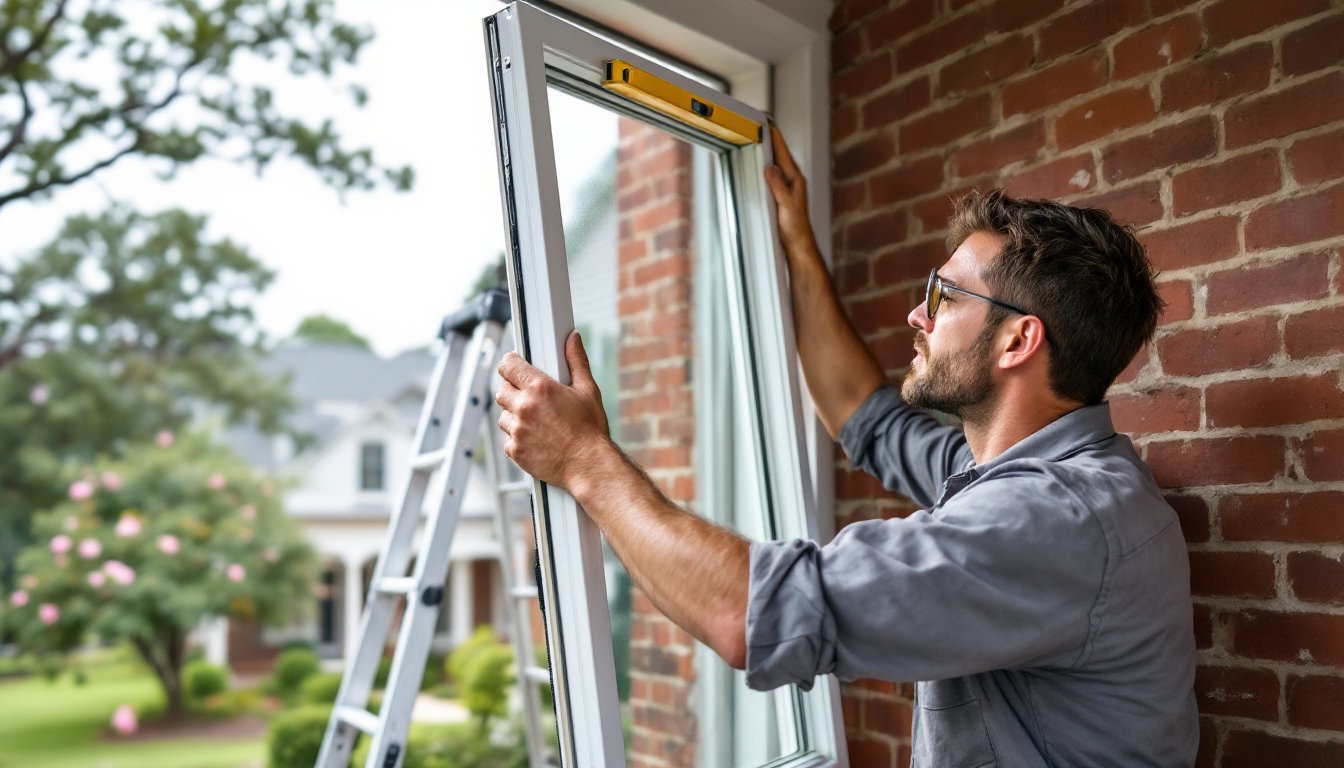
Be honest: DIY window installation is advanced-level work. If you’ve never installed trim, worked with shims and levels, or applied flashing tape, this isn’t the project to learn on.
When DIY makes sense:
- You’re replacing one or two windows in non-critical areas (workshop, shed)
- You’re doing insert replacements in square, plumb openings with sound frames
- You own or can borrow a quality level, square, pry bar, oscillating multi-tool, and caulk gun
- You’re comfortable working on a ladder and handling 50–80 lb. window units
Realistic time estimate: 3–5 hours per window for a first-timer doing insert replacements. Full-frame replacements take longer and require exterior trim removal, flashing installation, and often siding or brick mold repair.
When to hire a pro:
- You’re replacing more than three windows (labor cost per unit drops with volume)
- Windows are on second stories or require scaffolding
- Existing frames show rot, water damage, or the opening is out of square
- You’re installing specialty units (bays, bows, picture windows)
- Manufacturer warranty requires certified installation
In Birmingham’s climate, improper flashing is the #1 cause of callback issues. Pan flashing at the sill and flexible flashing tape integrated with the weather-resistant barrier (housewrap or building paper) are critical. Miss these steps and you’ll have water running into wall cavities within a year.
Safety note: Always wear safety glasses and work gloves. Old windows often have broken glass, rusty nails, and sharp metal edges. If working above ground level, use proper ladder stabilizers and have a second person spot you when lifting units into openings.
Energy Efficiency and Rebates Available in Alabama
Upgrading to energy-efficient windows can lower utility bills and may qualify for financial incentives.
Federal tax credits: The Inflation Reduction Act extended the Energy Efficient Home Improvement Credit through 2032. Homeowners can claim 30% of the cost (up to $600 annually) for ENERGY STAR-certified windows and skylights. Check the ENERGY STAR Most Efficient list for qualifying products, look for windows that meet the Southern climate zone criteria (U-factor ≤ 0.30, SHGC ≤ 0.25).
Alabama Power incentives: Alabama Power periodically offers rebates for energy-efficient home upgrades, though window-specific rebates aren’t always active. Check their Residential Programs page or call to ask about current offers. Some programs bundle windows with insulation or HVAC upgrades.
Local utility programs: If you’re served by a municipal utility or cooperative, ask about energy audit programs. Some offer rebates or low-interest financing for efficiency improvements.
ENERGY STAR ratings explained: For Birmingham (Climate Zone 3), prioritize:
- U-factor: 0.30 or lower (measures insulation value: lower is better)
- SHGC: 0.25–0.30 (measures solar heat blocked: lower reduces cooling costs)
- Visible Transmittance (VT): 0.40–0.60 (how much light passes through: higher is brighter but can increase glare)
Triple-pane windows offer even better insulation (U-factor as low as 0.17), but in Birmingham’s mild winters, the extra cost rarely pays back in energy savings. Stick with quality double-pane units with the right coatings.
Long-term savings: A whole-house window upgrade can cut heating and cooling costs by 15–25% annually. For an average Birmingham home spending $1,800/year on HVAC, that’s $270–$450 in annual savings, meaning a $12,000 project could pay back in utility savings and comfort over 10–15 years, not counting resale value.