Kitchen islands have evolved from luxury add-ons to functional essentials that anchor modern kitchens. West Elm’s lineup stands out for combining mid-century aesthetics with practical storage and workspace needs. Whether upgrading a cramped galley kitchen or filling out an open-concept space, their islands deliver clean lines and versatile finishes that work with existing cabinetry without demanding a full remodel. This guide walks through selecting, installing, and styling a West Elm kitchen island that actually earns its footprint.
Table of Contents
ToggleWhy West Elm Kitchen Islands Stand Out in Modern Home Design
West Elm’s design philosophy leans heavily on mid-century modern principles, tapered legs, warm wood tones, and uncluttered silhouettes that avoid the ornate detailing found in traditional farmhouse islands. Most models feature solid wood or engineered wood frames with lacquered or oil-rubbed finishes, making them easier to match with existing hardwood floors or butcher-block countertops.
Unlike big-box furniture that relies on particleboard cores, West Elm islands typically use kiln-dried hardwood for legs and structural members, reducing warping in humid kitchens. The drawers run on soft-close undermount slides rated for 75–100 lb loads, a step up from side-mount hardware that wears out faster under heavy pot storage.
Another differentiator is modular flexibility. Several models offer optional wine racks, towel bars, or drop-leaf extensions that bolt onto the frame without permanent modification. This lets homeowners adjust the island’s function as needs change, converting a breakfast bar into extra prep space when hosting, for example.
The aesthetic consistency also simplifies coordination. West Elm publishes finish swatches and dimensional drawings for each island, so designers can confirm the walnut stain on a Monroe Island matches the walnut dining chairs before ordering. That level of spec detail is rare in furniture marketed to general consumers.
Top West Elm Kitchen Island Models and Their Unique Features
Monroe Kitchen Island
The Monroe features a solid acacia wood top with a natural oil finish and blackened steel legs. Its footprint runs 48″ W × 24″ D × 36″ H, suitable for kitchens with at least 42″ of clearance on the working side (per IRC recommended aisle width). Two full-extension drawers and a lower shelf provide open storage for mixing bowls or cookbooks.
Acacia’s high Janka hardness (1,410 lbf) resists knife scars better than pine or poplar, but the open grain does require periodic oiling to prevent water stains near the sink area.
Williams Sonoma Co-Branded Island
This collaboration model pairs a marble or quartz composite top with a painted hardwood base. The top measures 60″ W × 30″ D, giving enough surface area for rolling dough or plating multiple dishes. Built-in wine storage holds 12 bottles in individual cubbies, and the cabinet doors use concealed European hinges for clean lines.
Be aware that the marble option weighs approximately 180 lb fully assembled, so floor joists in older homes should support at least 40 lb/sq ft live load (standard for residential floors, but worth verifying if the subfloor shows sag).
Alexa Reclaimed Wood Island
Constructed from reclaimed pine with visible nail holes and color variation, the Alexa model fits rustic or industrial kitchens. Its 72″ length makes it ideal for open-plan spaces where the island doubles as a room divider. Three dovetailed drawers and two cabinets with adjustable shelves maximize storage.
Reclaimed wood can contain knots or splits that are cosmetic rather than structural. Check the return policy if uniformity matters for your design scheme.
Industrial Modular Island
This stainless steel and wood hybrid mirrors commercial kitchen aesthetics. The 18-gauge stainless top is NSF-rated for food prep, and the galvanized steel frame resists rust in high-humidity climates. The modular design allows stacking additional shelves or swapping wood end panels for perforated metal.
It’s the heaviest option at 220 lb, requiring two people for assembly and positioning.
How to Choose the Right Size and Style for Your Space
Measure Clearances First
42″ minimum clearance on all working sides ensures cabinet doors and dishwashers can open without hitting the island. For kitchens with two cooks, bump that to 48″. Measure from the island’s footprint, not the countertop overhang, since bar stools will extend another 12–18″ when pulled out.
Use painter’s tape to outline the island’s exact dimensions on the floor. Live with that outline for a few days to confirm it doesn’t choke traffic flow between the fridge and stove, the most-traveled path in any kitchen.
Match Countertop Height to Function
Standard West Elm islands sit at 36″ counter height, matching base cabinets for consistent work surfaces. Models with seating often include a 42″ bar-height section, requiring taller stools with footrests.
If using the island primarily for baking, consider a model with a lower 30″ marble inset for easier dough rolling. West Elm’s custom shop can sometimes accommodate non-standard heights, though lead times stretch to 8–10 weeks.
Coordinate Finishes with Existing Materials
Walnut, white oak, and acacia wood tones dominate West Elm’s catalog. Walnut’s dark chocolate hue pairs well with white or light gray cabinetry for contrast, while white oak’s golden undertones complement warmer paint colors like greige or taupe.
For painted finishes, request a sample chip before ordering. West Elm’s “Frost White” reads cooler (blue undertones) than Benjamin Moore’s “Simply White,” which can clash if your walls lean warm.
Storage Needs Drive Configuration
Count your stockpots, baking sheets, and small appliances, then match that to drawer depths and cabinet dimensions. Many home improvement enthusiasts underestimate how much vertical space a stand mixer requires (typically 14–16″ clearance with the bowl attached). West Elm’s spec sheets list interior cabinet dimensions, so check those against your tallest items.
Installation and Assembly: What to Expect
Unpacking and Inventory
West Elm islands ship in multiple boxes, typically three to five, depending on the model. The top and base arrive separately to prevent transit damage. Inspect all pieces before discarding packaging. Look for cracked wood, dented metal, or missing hardware bags.
Hardware usually includes cam locks, dowels, and European screws. West Elm packs extras, but confirm counts against the instruction sheet before starting assembly.
Assembly Time and Tools
Plan for 2–3 hours with two people. Most models don’t require power tools, an Allen wrench set and Phillips screwdriver handle the job, but a cordless drill with hex bits speeds up repetitive fastening.
Wood glue isn’t typically included, but applying a dab to dowel joints adds rigidity if the island will be moved frequently (though most codes and kitchen design ideas recommend anchoring freestanding islands over 36″ tall to prevent tipping).
Leveling and Anchoring
Adjustable feet on the island’s legs compensate for uneven floors. Use a 48″ level across the top in both directions, then turn the feet until bubbles center. Slopes greater than ¼” over 4 feet may require shimming with composite shims, which won’t compress like wood.
For earthquake-prone regions or homes with young children, lag bolt the island to the floor. Drill pilot holes through the mounting holes in the base (hidden inside cabinets), then drive 3″ lag screws into floor joists. If joists run parallel to the island, use a toggle bolt rated for the island’s weight plus any stored items.
Electrical Considerations
Some West Elm islands include knockouts for outlets or USB ports, but they don’t ship pre-wired. Adding receptacles requires running 12/2 NM cable from an existing circuit or installing a new 20-amp circuit per NEC 210.52(C)(2), which mandates receptacles for countertop surfaces. This is a job for a licensed electrician unless you’re comfortable pulling permits and working inside walls.
Styling Your West Elm Kitchen Island Like a Pro
Keep the Countertop Functional
Style blogs love crowded vignettes, but working kitchens need clear workspace. Limit permanent items to a cutting board, knife block, and a small bowl for fruit or utensils. Decorative trays corral these items and create a “zone” that’s easy to clear when prep work begins.
For islands with seating, leave at least 24″ of linear space per stool to avoid elbow clashes. Runner rugs or pendant lights define the dining side visually without cluttering the work surface.
Pendant Lighting Placement
Hang pendants 30–36″ above the countertop to avoid head bumps while providing task lighting. For a 60″ island, two pendants spaced 24–30″ apart deliver even coverage. Match the metal finish to cabinet hardware, brushed nickel with satin nickel pulls, matte black with oil-rubbed bronze.
LED bulbs in the 2700–3000K range mimic incandescent warmth without the heat buildup that can warp wood finishes over time.
Lower Shelf Styling
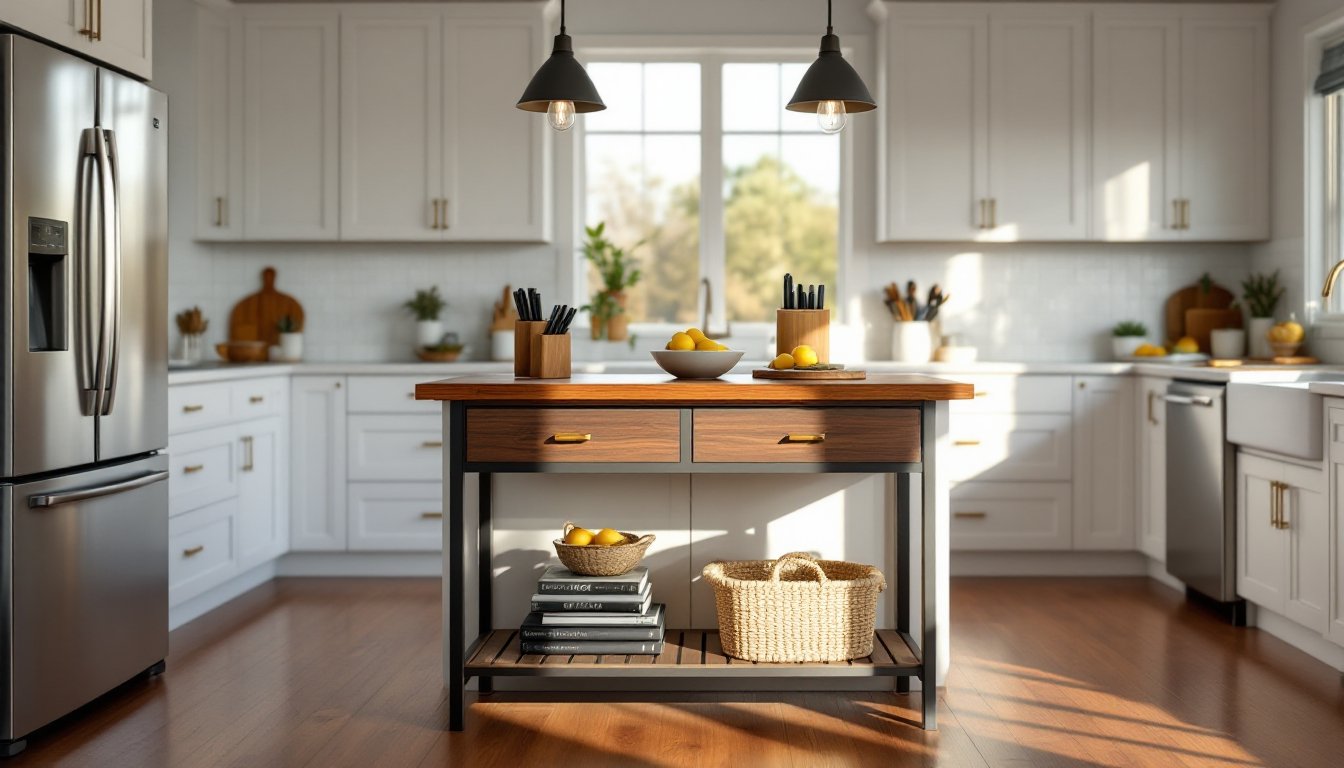
Open lower shelves invite visual clutter. Stick to matching baskets or ceramic crocks that hide less attractive items like aluminum foil or dish towels. Woven seagrass baskets complement natural wood tones, while wire baskets suit industrial designs.
Cookbooks and cutting boards can be displayed upright, but avoid overloading shelves, most are rated for 30–40 lb distributed load, not concentrated weight on one side.
Seasonal Swaps
Rotate smaller decor elements quarterly to keep the island feeling fresh. A wooden dough bowl filled with winter citrus, spring herbs in terracotta pots, or a simple hurricane candle for fall dinners adds personality without permanent commitment. Home improvement hobbyists often appreciate seeing curated styling tips for inspiration.
Maintenance Tips to Keep Your Island Looking Fresh
Wood Top Care
Oiled finishes like those on acacia or walnut require reapplication every 4–6 months in active kitchens. Use food-safe mineral oil or a beeswax blend, wiping on a thin coat and buffing after 15 minutes. This prevents water rings and darkening around the sink area.
For lacquered or polyurethane finishes, a damp microfiber cloth handles daily cleanup. Avoid all-purpose cleaners with ammonia, which can cloud the finish over time.
Painted or Lacquered Base Maintenance
White or light-colored painted bases show scuffs near the floor. Touch up chips with the manufacturer’s paint code (listed in the care instructions) rather than guessing at a hardware store match. Clean painted surfaces with pH-neutral dish soap and water, acidic or alkaline cleaners can dull the sheen.
Metal Hardware and Surfaces
Brushed or oiled metal hardware develops a patina that many find desirable, but polished finishes require occasional buffing with a soft cloth. Stainless steel tops resist stains but show fingerprints: wipe with the grain using stainless cleaner or a 1:1 vinegar-water solution.
Drawer Slide Lubrication
Soft-close slides rarely need service, but if drawers start sticking, a silicone-based lubricant on the roller tracks restores smooth action. Avoid oil-based products that attract dust.
Seasonal Deep Cleaning
Pull the island away from its position twice a year to vacuum underneath and check for loose fasteners. Kitchen humidity can cause wood to expand and contract, occasionally backing out screws in the base. Retighten with a screwdriver, but don’t overtorque, stripping threads in hardwood requires drilling out and refilling with dowels.
For detailed maintenance routines and product comparisons, many homeowners reference online galleries showing real-world wear over time.
Conclusion
A well-chosen West Elm kitchen island delivers workspace, storage, and style without requiring a contractor or custom cabinetry. Measure clearances carefully, match finishes to existing materials, and plan for two-person assembly. Regular oiling or cleaning keeps wood and painted surfaces looking sharp for years. The right island becomes the kitchen’s workhorse, not just a showpiece.