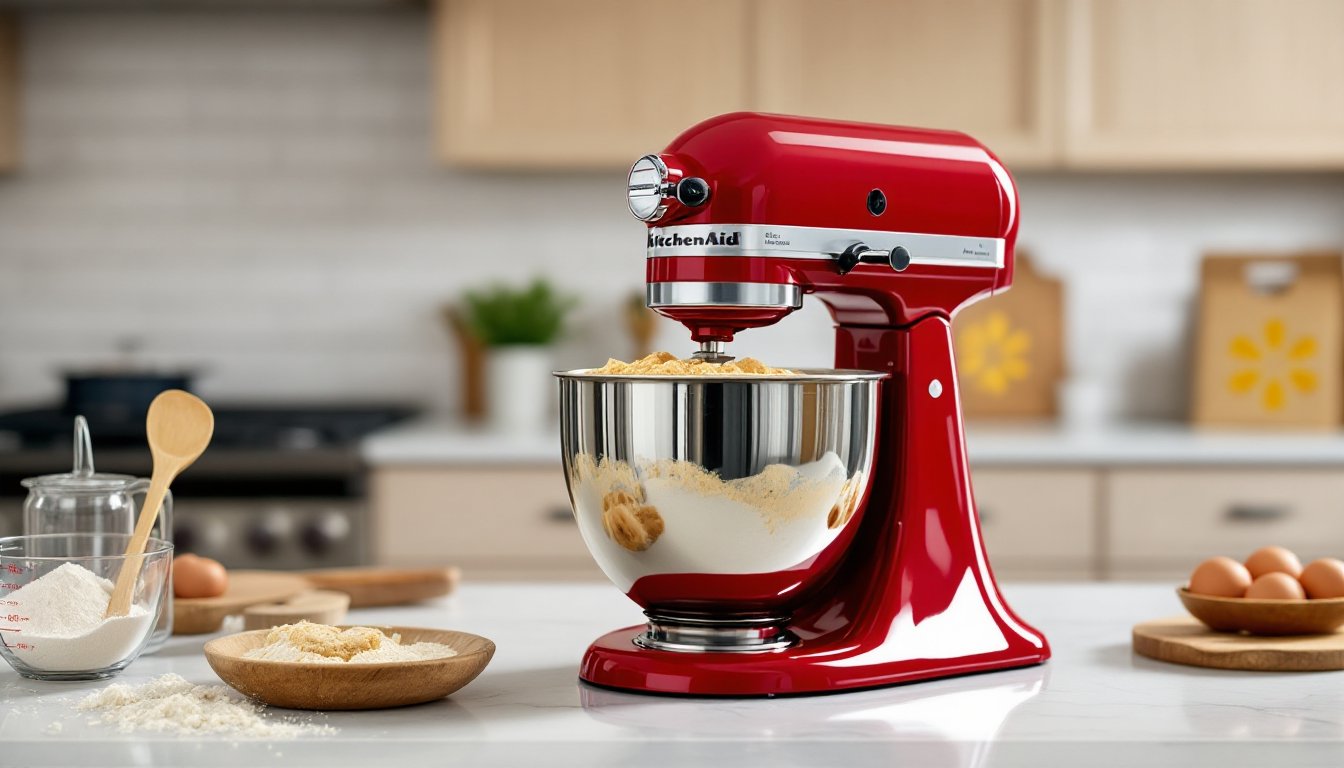
KitchenAid stand mixers have earned their reputation as workhorses in home kitchens, but finding the right model at the right price takes strategy. Walmart’s 2026 inventory offers several KitchenAid series at competitive price points, often with exclusive bundles and seasonal rollbacks that undercut specialty retailers. Whether you’re kneading bread dough for the first time or upgrading from a hand mixer, understanding which models Walmart stocks, and when to buy, can save significant cash while landing a mixer that’ll last decades. This guide breaks down the practical details: model differences, pricing patterns, and setup tips that maximize your investment without the fluff.
Table of Contents
ToggleKey Takeaways
- Walmart KitchenAid mixers are priced 15-30% below MSRP during seasonal clearance events (January, late May, and Black Friday), with free in-store pickup eliminating shipping costs and damage risks for this heavy 20+ pound appliance.
- Choose between Classic Series (250W, best for occasional bakers at $229-$279), Artisan Series (325W, ideal for weekly home bakers at $349-$429), or Professional models (450W+, designed for serious bakers at $449-$599) based on your dough density and batch size requirements.
- Set beater-to-bowl clearance to 1/8 inch thickness during initial setup, measure 14-16.5 inches of counter clearance before purchase (depending on tilt-head vs. bowl-lift design), and inspect open-box models for power cord condition and intact planetary gears to avoid costly repairs.
- Enable price-drop notifications in the Walmart app, use price-match guarantees against Amazon and Target, and check appliance aisle endcaps for clearance-sticker open-box deals that can save $100+ on Artisan KitchenAid mixers.
- Inspect motor brushes every 50 hours of use (every 6-12 months) through the rear access panel, hand-wash the bowl and attachments on first use to detect defects during the 90-day return window, and wipe the planetary shaft after each use to prevent dough buildup and extend appliance life.
- Over 15 optional attachments (pasta rollers, meat grinders, spiralizers) connect via the power hub on all current Walmart KitchenAid models, allowing you to expand functionality over time while the one-year warranty covers motor, gearbox, and electrical failures.
Why Buy a KitchenAid Mixer at Walmart?
Walmart’s pricing structure and distribution network create genuine advantages for stand mixer shoppers. The retailer’s high-volume purchasing agreements with KitchenAid often translate to lower baseline prices compared to boutique kitchen stores or online-only sellers. Walmart also runs quarterly rollback events, typically in January post-holiday clearance, late spring before wedding season, and Black Friday through December, where select KitchenAid models drop $50 to $100 below MSRP.
Free in-store pickup eliminates shipping costs and lets buyers inspect the box for damage before leaving the parking lot. This matters for a 20+ pound appliance with a motor and metal gearbox: shipping damage claims can delay use by weeks. Walmart’s return policy allows 90 days for most small appliances with a receipt, giving ample time to test attachments and motor performance under real baking loads.
The store’s Site to Store program occasionally surfaces open-box or returned mixers at local locations, sometimes discounted 15-30%. These units carry the same manufacturer warranty if the box seal is intact. Check the paddle, dough hook, and whisk for wear: minor cosmetic scuffs on the bowl are acceptable, but chipped paint or grinding noises during the tilt-head test indicate a hard return.
KitchenAid Mixer Models Available at Walmart in 2026
Walmart stocks three primary KitchenAid series as of early 2026, each targeting different kitchen workloads and counter space constraints. Model availability varies by store: larger Supercenters typically carry floor displays, while smaller locations stock online-only SKUs for pickup.
Classic Series vs. Artisan vs. Professional Models
The Classic Series (KSM75) features a 4.5-quart stainless steel bowl and a 250-watt motor. This tilt-head design suits occasional bakers making single batches of cookies or cake batter. The motor handles standard all-purpose flour doughs but labors with dense whole-grain bread recipes exceeding two pounds. Walmart pricing hovers around $229-$279 depending on color: pastel shades often cost $20 less than matte black or metallic finishes. The Classic includes a coated flat beater, dough hook, and wire whip. It’s adequate for weekly use but lacks the power headroom for artisan bread enthusiasts.
The Artisan Series (KSM150) steps up to a 5-quart bowl and 325-watt motor, adding capacity for double cookie batches or 2.5 pounds of bread dough. The tilt-head mechanism and 10-speed control remain, but the motor runs cooler under sustained loads. Walmart’s typical Artisan pricing sits between $349-$429, with exclusive color bundles (often including a flex-edge beater or pasta roller attachment) appearing during spring and holiday cycles. Some home cooks find value in kitchen appliance reviews that compare motor longevity across daily versus weekly use patterns. The Artisan’s bowl-lift-free design saves vertical counter space but limits clearance for large dough hooks in cabinet-mounted scenarios.
Professional 5 Plus and Pro 600 models target serious bakers and small-scale caterers. The Pro 5 Plus (KV25G) uses a bowl-lift mechanism instead of a tilt head, stabilizing the 5-quart bowl during high-torque kneading. Its 450-watt motor powers through triple batches of bagel dough or stiff cookie dough without overheating. Walmart stocks this model sporadically at $449-$529, usually in brushed nickel or empire red. The Pro 600 (KP26M) enlarges the bowl to 6 quarts and adds a soft-start feature that prevents flour clouds when mixing dry ingredients. Expect $499-$599 pricing: this model competes with refurbished commercial mixers at restaurant supply stores but includes a full manufacturer warranty.
All current Walmart KitchenAid models include a one-year hassle-free replacement warranty covering motor, gearbox, and electrical failures. Third-party attachment compatibility (pasta extruders, meat grinders, spiralizers) works across all series via the power hub on the front of the motor housing.
How to Find the Best Deals on KitchenAid Mixers at Walmart
Walmart’s pricing algorithms adjust daily based on regional competition and inventory turnover, but predictable patterns emerge for patient shoppers. The Walmart app tracks price drops via the “saved items” feature: add your preferred model and enable notifications. Prices often dip Thursday evenings as the system prepares for weekend traffic.
Clearance timing follows specific calendar windows. January 10-31 sees post-holiday markdowns on gift-return inventory and previous-year colors. Late May through early June targets wedding registries with bundle deals pairing a mixer with a food processor or blender at 20-25% off combined MSRP. Black Friday through Cyber Monday offers the steepest discounts, historically $80-$120 off Artisan models, but selection skews toward less popular colors. According to recent analysis of Walmart kitchen deals, the retailer sometimes undercuts major sales events with quieter mid-year promotions on appliances.
Price matching applies to Walmart.com, Amazon, and Target listings if the exact model number (including color suffix) matches and the competitor shows in-stock availability. Bring up the competitor’s product page on your phone at checkout or submit a claim through Walmart’s online chat within seven days of purchase. Regional warehouse clubs like Costco occasionally bundle KitchenAid mixers with extra bowls or attachments: Walmart won’t match the bundle but may adjust the base mixer price.
Refurbished and open-box units appear unpredictably. Check the appliance aisle endcaps at your local Supercenter for yellow clearance stickers: open-box Artisan models sometimes land at $249-$299. Inspect the power cord for fraying, test the speed control dial through all 10 settings, and verify all three standard attachments are present. Missing a $12 dough hook isn’t a deal-breaker, but a cracked planetary gear (visible when you remove the beater and look into the mixing shaft) means walk away.
What to Consider Before Purchasing Your Walmart KitchenAid Mixer
Counter space and storage dictate which series fits your kitchen layout. The Classic and Artisan tilt-head models require 14 inches of vertical clearance when tilted back for bowl removal. Measure the gap between your counter and the bottom of upper cabinets: many standard kitchen designs provide only 18 inches, leaving little room to maneuver. Professional bowl-lift models need 16.5 inches of clearance but tilt forward instead of back, sometimes fitting under cabinets that block tilt-head designs.
Motor capacity versus recipe demands prevents buyer’s remorse. If you bake bread weekly or make large batches of stiff cookie dough (think triple-chocolate chunk with cold butter), the Classic’s 250-watt motor will overheat and trigger the thermal cutoff after 8-10 minutes. The Artisan’s 325-watt motor handles those loads comfortably. Professional models shine when kneading 3+ pounds of dough or running the meat grinder attachment for more than 15 minutes continuously. Match motor wattage to your heaviest expected task, not your average one.
Attachment ecosystem expands the mixer’s utility beyond beating eggs. The power hub accepts over 15 optional attachments, from pasta rollers to grain mills. If you plan to invest in attachments over time, verify the Walmart model includes the hub cover and attachment knob (all current production units do). Enthusiasts exploring workshop tool strategies often apply the same logic to kitchen appliances: buy the platform that grows with your skills.
Noise levels vary by series. The Classic and Artisan emit 65-70 decibels at medium speeds, comparable to a dishwasher. Professional models with higher-wattage motors hit 75-80 decibels under load, noticeable in open-concept kitchens during early-morning baking sessions. All models vibrate slightly when mixing dense dough: placing a rubber shelf liner under the base prevents counter walking.
Warranty and service access matter for a 10+ year appliance. KitchenAid’s standard one-year warranty covers parts and labor through authorized service centers. Walmart offers optional extended protection plans for $30-$60 (depending on model price) adding two to four years of coverage. These plans cover normal-wear failures like worn carbon brushes or planetary gear replacements but exclude damage from misuse (running the mixer with a stuck beater, overloading capacity). The nearest authorized KitchenAid service center is usually within 50 miles in metro areas: rural buyers may face $50+ shipping costs for warranty repairs.
Setting Up and Maximizing Your KitchenAid Mixer at Home
Unboxing and inspection should happen before the return window starts ticking. Remove all packing foam and locate the three standard attachments (flat beater, dough hook, wire whip) in the bowl. Check the speed control plate on the right side of the motor head: it should click firmly through all 10 settings without skipping or sticking. Plug the unit in and run it at speed 2 for 30 seconds with an empty bowl to verify smooth operation and no grinding sounds.
Initial cleaning removes manufacturing oils. Hand-wash the bowl, beaters, and attachments in warm soapy water (they’re dishwasher-safe, but hand-washing the first time lets you inspect for defects). Wipe the motor housing and planetary shaft with a damp cloth: avoid submerging or spraying water into the speed control area.
Beater-to-bowl clearance requires adjustment out of the box. The flat beater should clear the bowl bottom by 1/8 inch (about the thickness of a nickel). Too much clearance leaves unmixed pockets: too little causes scraping and wear. Tilt the head back (or lower the bowl on lift models), then turn the adjustment screw on the motor shaft counterclockwise to lower the beater, clockwise to raise it. Make quarter-turn adjustments and test with a small batch of dough.
Proper loading technique prevents overwork and mess. Add dry ingredients to the bowl first, then liquids, then fats. Start at speed 1 or 2 for the first 15-20 seconds to incorporate flour without creating dust clouds. Gradually increase to the recipe’s recommended speed. Scrape the bowl sides with a silicone spatula midway through mixing: the beater doesn’t reach the upper rim on any model.
Maintenance intervals extend service life. Wipe the planetary shaft and beater attachment hub after each use to prevent dough buildup. Every 50 hours of use (roughly every 6-12 months for home bakers), inspect the carbon motor brushes through the rear access panel (consult the manual for location). If brushes measure less than 1/4 inch, order replacements from KitchenAid or a parts supplier: this $15 repair prevents a $200 motor replacement. The gearbox is factory-sealed and requires no lubrication.
Attachment storage keeps accessories organized. The included pouch holds the three standard beaters, but optional attachments pile up fast. A dedicated drawer organizer or countertop caddy prevents the pasta roller from denting the food grinder shaft. Store attachments clean and dry: moisture in the attachment hub causes corrosion that makes removal difficult.
Conclusion
Buying a KitchenAid mixer at Walmart in 2026 balances immediate savings with long-term kitchen capability. The Classic suits light-duty bakers on a budget, the Artisan handles most home baking demands, and Professional models tackle commercial-adjacent workloads. Watch for seasonal rollbacks, verify counter clearances before checkout, and adjust beater height during setup. A well-chosen mixer outlasts most kitchen appliances, and Walmart’s return policy gives you three months to confirm you picked the right workhorse.