The pattern you choose for vinyl plank flooring can make or break the visual flow of a room. While the material itself is forgiving and DIY-friendly, the layout you select affects everything from perceived room size to how many cuts you’ll make. Most first-timers default to whatever’s easiest, then regret it once the furniture’s in and the sightlines feel off. The good news? Vinyl’s flexibility means you can experiment with patterns that would be cost-prohibitive in hardwood or tile. This guide covers the most practical installation patterns, what each one does for a space, and which layout makes sense for your skill level and room dimensions.
Table of Contents
ToggleKey Takeaways
- Vinyl plank flooring installation patterns affect visual proportions, structural stability, and material waste, with straight lay using 5-10% waste compared to herringbone’s 20-25%.
- Straight lay and brick patterns are best for DIY beginners, while diagonal, herringbone, and chevron layouts require advanced tool skills and precision but create visually striking results.
- Run planks parallel to the longest wall in narrow rooms to make spaces feel wider, and reserve diagonal or herringbone patterns for square rooms where they add visual drama without overwhelming the space.
- Herringbone and chevron patterns can cost $1.50-$3.00 more per square foot in labor and typically double installation time compared to straight lay, making them ideal only for focal-point rooms like entryways or dining areas.
- Brick pattern offers the best middle ground—it distributes stress evenly, wastes under 10% of material, and provides visual continuity in open-concept spaces without being overly complex.
- Always dry-lay diagonal installs before locking planks, and address subfloor leveling before installation to prevent seams from highlighting dips or bumps that become visible in patterned layouts.
Why Your Installation Pattern Matters More Than You Think
Flooring pattern isn’t just aesthetics, it influences structural performance and installation difficulty. The direction and offset of planks determine how seams line up, which affects both visual appeal and the floor’s ability to handle foot traffic without buckling.
Pattern choice impacts three key factors:
- Visual proportions: Planks running parallel to the longest wall make narrow rooms feel wider. Diagonal runs add square footage visually but require more material waste.
- Structural stability: Floating floors expand and contract. Patterns with staggered seams (minimum 6-8 inches offset between rows) distribute movement stress better than aligned seams.
- Cut waste and labor: Straight patterns waste roughly 5-10% of material. Diagonal layouts can push waste to 15-20%, and herringbone patterns may hit 20-25% depending on room shape.
Choosing the wrong pattern for a room’s shape often means fighting the layout through the entire install. A herringbone pattern in a 10×10 room creates four times the cuts of a straight lay in the same space. If you’re paying by the hour or working weekends, that math matters.
Straight Lay Pattern: The Classic Choice for Any Room
The straight lay (also called running bond when offset) is the default for most DIY installs. Planks run parallel to one wall, typically the longest, with each row offset by at least a third of the plank length. It’s fast, waste-efficient, and works with any skill level.
Installation steps:
- Establish your starting wall. Choose the longest, straightest wall. Check it with a chalk line, few walls are truly straight.
- Lay the first row with the tongue facing out. You’ll need a ¼-inch expansion gap at all walls: use spacers.
- Offset each row by 6-12 inches minimum. Many installers use the cutoff from the previous row to start the next, creating a random offset.
- Lock planks at a 20-30 degree angle, then press down. Most vinyl plank uses a modified tongue-and-groove or click-lock system.
Straight lay shows the natural grain and plank variation best, which is why it’s preferred for wood-look luxury vinyl. The offset keeps seams from forming long sight lines, which can look cheap. Avoid the “H-joint” pattern where seams in alternating rows align, it weakens the floor and screams amateur hour.
This pattern works in any room size but shines in hallways and rectangular spaces. It’s also the easiest to repair later: pop out a damaged plank without disrupting the whole floor.
Diagonal Pattern: Adding Visual Drama and Dimension
Running planks at a 45-degree angle to the walls makes square rooms feel larger and hides wall irregularities. It’s a step up in difficulty from straight lay, but not by much if you own a miter saw and a speed square.
The diagonal layout requires more planning. Start by snapping a chalk line at 45 degrees from the room’s center point or from one corner. Your first plank runs along this line, and every subsequent row follows parallel. You’ll cut triangular pieces to fill in along the walls, which is where the material waste comes from.
Key considerations:
- Waste factor: Budget an extra 15-20% beyond the room’s square footage. Those triangular edge pieces add up.
- Tool requirements: A miter saw makes angled cuts cleaner and faster than a circular saw with a clamped straightedge, though both work.
- Best rooms: Square or nearly square spaces (12×14, 15×15) where the diagonal creates movement. In long, narrow rooms, it can look forced.
Diagonal patterns pair well with tile-look vinyl planks or stone patterns, where the angled layout mimics traditional tilework. For wood-look planks, the effect is striking but less common, which can be a selling point if you want your floor to stand out.
One practical tip from experienced DIY project tutorials: dry-lay the first few rows before locking anything in. Diagonal installs amplify measurement errors, and repositioning after you’ve glued or clicked 30 planks is miserable.
Herringbone and Chevron Patterns: Elegant Sophistication
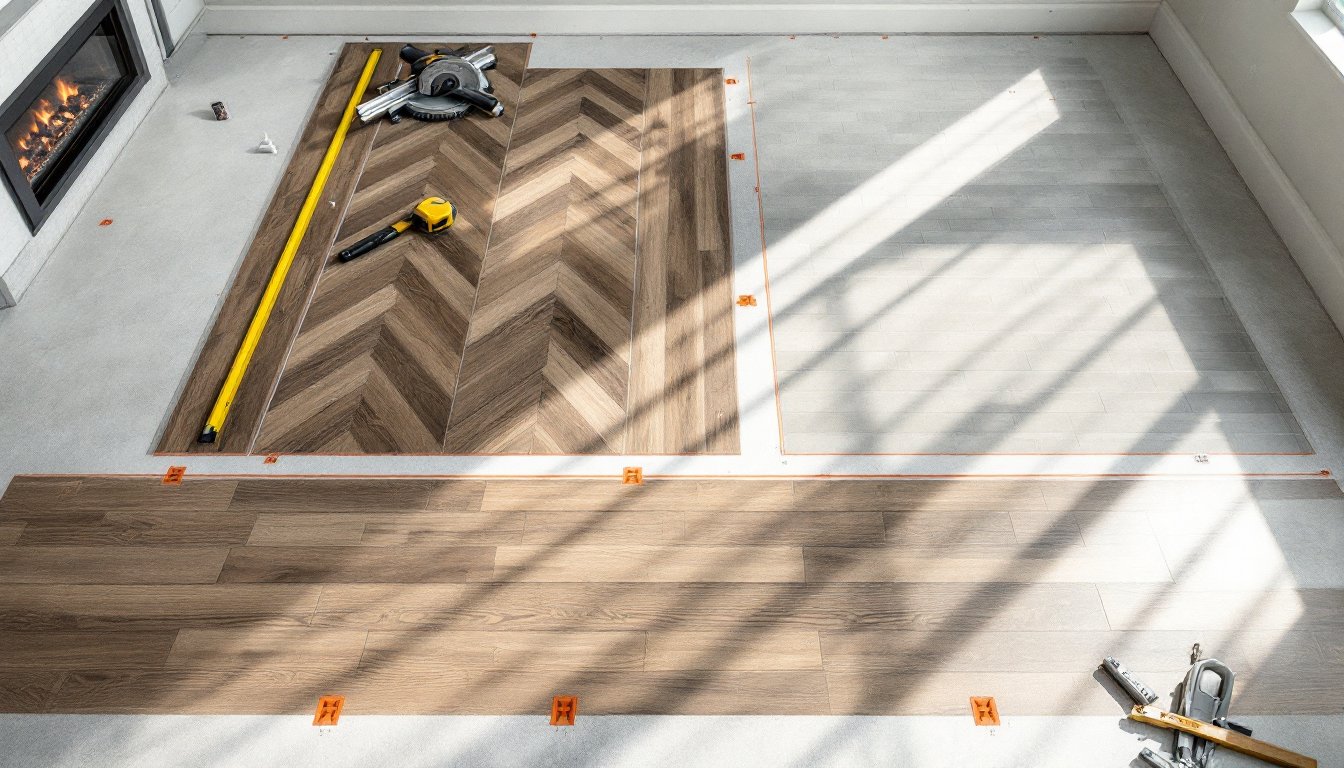
Herringbone and chevron are the premium patterns, visually stunning but labor-intensive. Both create a zigzag effect, but the construction differs. Herringbone planks meet at 90-degree angles, with ends cut straight. Chevron planks are cut at matching angles (typically 45 degrees) so the ends form a continuous line.
These patterns require precision. Each plank is cut to a specific length, and the angled cuts must be exact or the pattern drifts. A miter saw is non-negotiable: trying this with a utility knife will end badly. Most installers also use a chalk grid to keep rows aligned.
Installation overview:
- Find the room’s center point and snap perpendicular chalk lines forming a cross.
- Start at the intersection, laying planks in a “V” shape that radiates outward.
- Cut planks to consistent lengths, typically 12-18 inches for herringbone. Chevron requires each plank’s ends cut at the pattern angle.
- Work in quadrants, completing one section before moving to the next. This keeps the pattern square to the room.
Herringbone and chevron shine in entryways, dining rooms, and any space where the floor is a focal point. They’re overkill in a laundry room or basement. These patterns also show off plank quality: cheap vinyl with repetitive grain patterns looks worse in herringbone than straight lay because the pattern draws the eye.
Expect 20-25% material waste and at least double the installation time compared to straight lay. If you’re hiring out, herringbone installs often cost $1.50-$3.00 more per square foot in labor. Worth it for the right room, but not a pattern to choose on impulse.
Brick or Offset Pattern: The Most Popular DIY Option
The brick (or ashlar) pattern offsets each row by exactly half the plank length, creating a staggered effect like, you guessed it, a brick wall. It’s a middle ground between the randomness of straight lay and the precision of herringbone, and it’s the most common pattern in vinyl plank flooring installation guides.
Brick pattern works because it’s visually clean without being fussy. The consistent offset creates horizontal lines that widen a room, and the repetition is forgiving of minor measurement errors. It’s also structurally sound: the 50% offset distributes stress evenly across seams.
How to execute it:
- Start the first row with a full plank. Maintain your ¼-inch expansion gap with spacers.
- Begin the second row with a half plank (cut a full plank in half). This creates the 50% offset.
- Alternate full and half starts for each subsequent row. Some installers use a two-row pattern: others create a three- or four-row rotation to reduce pattern repetition.
- Lock planks as you go, checking every few rows with a straightedge to ensure you’re not drifting.
The brick pattern uses material efficiently, waste typically stays under 10%, and it’s fast once you get into a rhythm. It’s ideal for open-concept spaces where flooring runs through multiple rooms: the pattern provides visual continuity without overwhelming the space.
One caution: brick pattern can highlight unlevel subfloors. Because the seams form long, straight lines across rows, any dip or hump becomes more visible. If your subfloor needs leveling compound, address it before you start laying planks.
Choosing the Right Pattern for Your Space
Matching pattern to room shape and function prevents regret halfway through the install. Here’s how to narrow it down:
For narrow or long rooms (hallways, galley kitchens):
Run planks parallel to the longest wall using straight lay or brick pattern. This elongates the space. Diagonal or herringbone shortens it visually.
For square or open-concept rooms:
Diagonal, herringbone, or chevron add interest. Straight lay can feel flat in a 20×20 great room but works fine with varied furniture layouts.
For high-traffic areas:
Brick or straight lay with 8-10 inch offsets distributes wear better than herringbone. Luxury vinyl is durable, but seams still take more abuse than plank centers.
For basements or utility spaces:
Straight lay saves time and material. Save the fancy patterns for spaces guests see.
Skill level matters, too. If this is your first vinyl install, start with straight lay or brick. Herringbone and diagonal patterns punish measurement errors and require more tool proficiency. Many home renovation tutorials recommend a practice run in a closet or small bathroom before tackling a main living area with a complex pattern.
Budget reality check: Patterns with higher waste factors cost more in materials, and intricate layouts add labor hours. A 300-square-foot room in straight lay might need 315 square feet of vinyl: the same room in herringbone could require 375 square feet. At $2-$5 per square foot for mid-grade LVP, that’s a $120-$300 swing before labor.
Conclusion
Pattern choice shapes how a room feels and how long the install takes. Straight lay and brick patterns deliver clean results without drama, perfect for first-timers or budget-conscious projects. Diagonal, herringbone, and chevron layouts add visual punch but demand more time, material, and precision. Match the pattern to the room’s proportions, your skill level, and how much waste you’re willing to tolerate. The floor will be underfoot for years: spending an extra Saturday to get the layout right beats living with a pattern that never felt quite right.