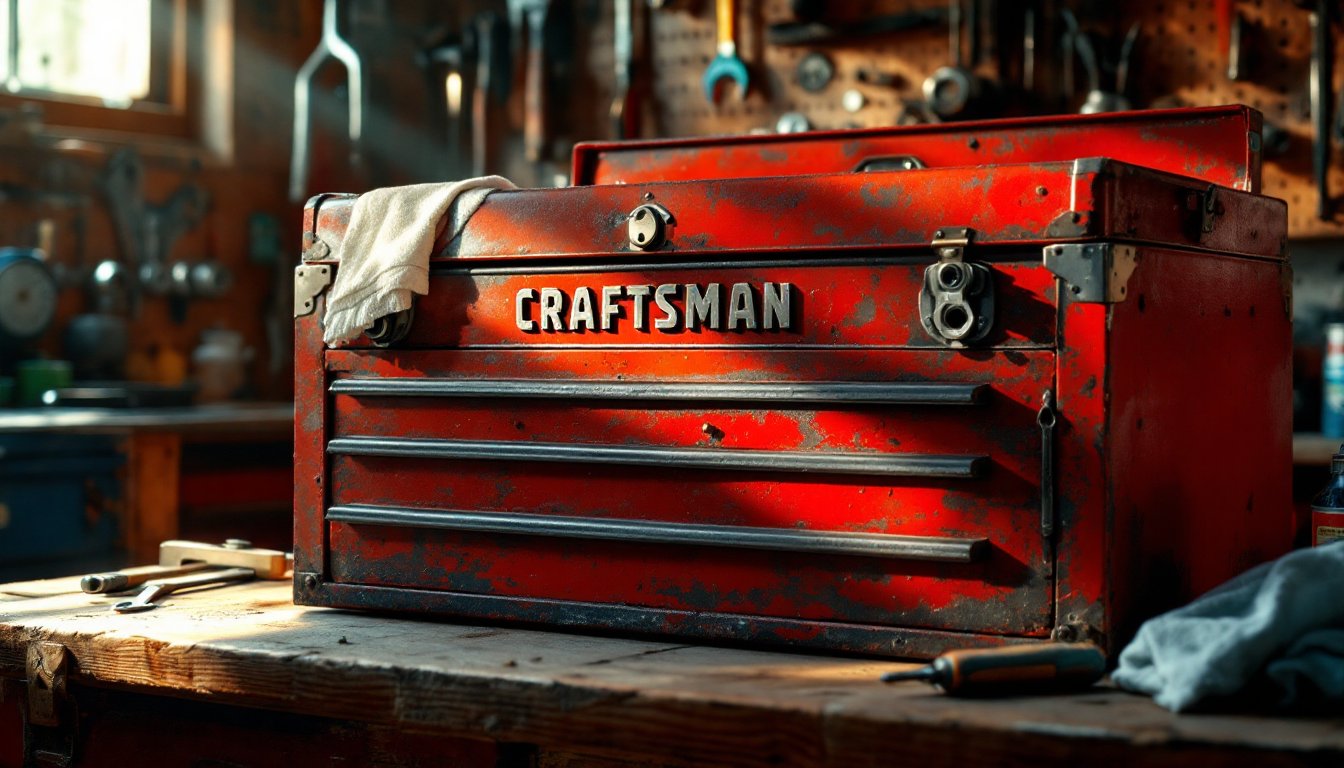
Vintage Craftsman tool boxes represent an era when Sears built storage gear that could survive decades of workshop abuse. These steel boxes, many stamped with the iconic red logo, have become coveted by collectors and working DIYers alike. Whether inherited from a grandfather’s garage or rescued from an estate sale, these boxes combine durability with a nostalgic aesthetic that modern plastic organizers can’t match. Understanding what to look for, how to verify authenticity, and the best restoration techniques turns a rusty find into a functional piece of workshop history.
Table of Contents
ToggleKey Takeaways
- Vintage Craftsman tool boxes feature heavy-gauge steel (18–20 gauge) with welded seams and ball-bearing slides that outperform modern alternatives and remain functional after 50+ years.
- Authentic vintage Craftsman tool boxes display stamped or embossed logos, Kennedy Manufacturing marks, dovetailed drawer construction, and spring-loaded latches that distinguish them from reproductions.
- Precise dating relies on logo style variations (script logos 1948–1972 versus block lettering post-1970s), patent numbers, and paint color progression from Mossman Brown to red to black with red trim.
- The best sources for finding affordable vintage Craftsman tool boxes include estate sales, farm auctions, rural workshops, and tool swap meets hosted by preservation organizations, with prices ranging from $40–800 depending on condition and rarity.
- Restoration begins with complete disassembly and assessment of structural integrity, using wire brushing for loose rust and phosphoric acid treatments for surface corrosion before repainting with period-correct enamel colors.
- Original vintage Craftsman tool boxes offer superior value for working users compared to imported alternatives, combining collectible appeal with genuine durability that justifies restoration investments.
What Makes Vintage Craftsman Tool Boxes So Desirable?
Craftsman tool boxes from the mid-20th century were manufactured with heavier-gauge steel than most contemporary alternatives. The company sourced boxes from Kennedy Manufacturing and other contractors who prioritized thick metal construction, typically 18 to 20-gauge steel, with welded seams instead of crimped joints. This meant handles didn’t tear off under load and drawer slides didn’t bend after a few years of use.
The ball-bearing drawer slides in many vintage models still glide smoothly after 50+ years, a testament to precision manufacturing. Contrast this with modern friction slides that bind when overloaded. Internal felt or cork drawer liners were common in premium models, protecting tools from rattling damage during transport.
Aesthetically, the evolution of the Craftsman logo provides visual interest. The script logo used from the 1950s through early 1970s differs notably from the block lettering that followed. Collectors prize specific badge variations, especially the raised metal emblems found on cantilever boxes from the 1960s.
Functionality also drives demand. These boxes were designed when hand tools dominated workshop spaces, before cordless drills and impact drivers required oversized storage. Their compartmentalized layouts suit wrench sets, screwdrivers, and precision measuring tools better than cavernous modern chests. A three-drawer machinist’s chest offers more organization per cubic foot than a rolling cart twice its size.
Identifying Authentic Vintage Craftsman Tool Boxes
Authentic Craftsman boxes carry specific manufacturing marks that separate them from reproductions or relabeled imports. Start by examining the logo placement and style. Pre-1980s boxes typically feature either stamped or embossed logos on the front panel, not adhesive decals. The metal should show slight relief around lettering, run your finger across it to confirm.
Check for a manufacturer’s mark inside drawers or on the underside. Kennedy Manufacturing stamps often appear alongside Craftsman branding on premium models from the 1950s–1970s. Other contractor names include Waterloo Industries and Gerstner (for high-end machinist chests).
Inspect the drawer construction. Vintage Craftsman drawers used dovetailed or fully welded corners, not spot-welded tabs. Pull a drawer completely out and flip it over, quality boxes show continuous welds along seams, and ball-bearing slides mount with machine screws, not rivets.
The latch mechanism tells a story. Cantilever boxes from the 1960s used spring-loaded side latches with metal strike plates. Cheaper reproductions use stamped hasps that wiggle in their mounts. Tray-style top boxes often feature a center latch with a rotating cam, examine whether the cam mechanism is steel or pot metal.
Dating Your Craftsman Tool Box
Precise dating requires cross-referencing logo styles with catalog archives. The script “Craftsman” logo dominated from approximately 1948 through 1972. Block lettering with a red background became standard in the mid-1970s. For enthusiasts seeking detailed timelines, resources from workshop history communities often maintain digitized Sears catalogs showing model variations by year.
Patent numbers stamped on latches or slides narrow production windows. Search the USPTO database using these numbers to find filing dates, subtract a year or two for probable manufacture. Model numbers, when present, follow Sears’ internal coding system where the first two or three digits indicate the product category and subsequent numbers reference production batches.
Paint color offers rough guidance. Craftsman used Mossman Brown (a chocolate brown) through the late 1950s before transitioning to red in the 1960s. Black boxes with red trim appeared in the 1980s. Repaints complicate this method, so look for original finish inside drawers or under removable trays.
Where to Find Vintage Craftsman Tool Boxes for Sale
Estate sales and farm auctions yield the best finds at reasonable prices. Rural areas where Sears was the primary tool retailer often have workshops full of decades-old Craftsman gear. Arrive early and inspect boxes before bidding, check for structural rust, not just surface patina.
Online marketplaces like Craigslist, Facebook Marketplace, and estate sale aggregators require patience. Search variations: “Craftsman toolbox,” “vintage tool chest,” “old Craftsman box,” and “Kennedy Craftsman” to catch different listing styles. Set alerts for new posts, as desirable models disappear within hours.
Antique malls and flea markets overprice based on aesthetics rather than condition. Vendors see a clean red box and assume collectibility without checking drawer slides or internal rust. This works both ways, a rusty brown box might be undervalued even though being a rare 1950s model in restorable condition.
Tool swap meets attract knowledgeable sellers who price accurately but also offer verified provenance. The Hand Tool Preservation Association and regional machinist groups host events where you’ll find everything from basic three-drawer chests to rare Gerstner-built Craftsman machinist cabinets. Expect to pay market rate, but you’ll avoid buying a relabeled import.
Scrap yards and metal recyclers occasionally receive entire workshop liquidations. Building relationships with yard managers can lead to calls before items hit the scrap pile. One caveat: rescuing a box from the scrap stream means accepting significant rust and missing hardware.
Restoring Your Vintage Craftsman Tool Box
Begin with complete disassembly. Remove all drawers, trays, and hardware. Photograph the latch mechanism and slide mounting positions before removing screws, vintage hardware doesn’t always have modern equivalents. Store small parts (screws, springs, cam pieces) in labeled containers.
Assess the structural integrity before committing to restoration. Surface rust is cosmetic: rust perforation through drawer bottoms or sidewalls requires welding repairs or patch panels. Press a screwdriver against suspect areas, if metal flakes away rather than bending, you’ve found advanced corrosion. Minor holes in drawer bottoms can be patched with 18-gauge steel cut to overlap by 1 inch on all sides, then brazed or welded.
Check drawer slides for wear grooves. Ball-bearing slides can be disassembled, cleaned with mineral spirits, repacked with lithium grease, and reinstalled if balls and races aren’t pitted. Replacement ball-bearing slides exist, but mounting holes rarely align with vintage spacing. Drilling new holes in a collectible box reduces value, repairs and adaptations documented by guides on classic tool restoration can help maintain authenticity.
Cleaning and Rust Removal Techniques
Start with the least aggressive method. Wire brushing with a drill-mounted cup brush removes loose rust and flaking paint without damaging base metal. Wear a dust mask and safety glasses, rust particulates are fine enough to irritate lungs. Work outdoors or in a well-ventilated space.
For surface rust, phosphoric acid-based treatments (like Naval Jelly or Rust-Oleum Rust Dissolver) convert iron oxide to iron phosphate, which can be wiped away. Apply with a brush, let sit per product instructions (usually 15–30 minutes), then scrub with a Scotch-Brite pad. Rinse thoroughly and dry immediately, bare steel flash-rusts in minutes.
Electrolytic rust removal works for heavily rusted hardware without damaging threads or fine details. Submerge parts in a plastic tub filled with water and washing soda (sodium carbonate, not baking soda), then connect a battery charger with the positive lead to a sacrificial steel electrode and negative to the rusty part. Current converts rust to a black coating that wipes off easily. This method requires basic electrical understanding, improper polarity can accelerate corrosion.
For sheet metal panels, sandblasting or media blasting provides the cleanest surface for repainting. Use 80-grit aluminum oxide at 60–80 PSI to avoid warping thin steel. Soda blasting is gentler but slower. Both create enormous dust clouds, work in a blast cabinet or rent time at a shop equipped for this work.
After rust removal, prime immediately with an epoxy-based primer (like Rust-Oleum Self-Etching Primer). This bonds to bare metal and prevents flash rust while you prepare topcoats. Two thin coats beat one heavy coat, each should dry to the touch in 30 minutes at 70°F.
For topcoats, Rust-Oleum Protective Enamel in gloss red or brown matches original Craftsman colors closely. Apply with a foam roller for smooth finish, or use a spray gun if you have HVLP equipment and proper respiratory protection. Plan for three coats with light sanding (320-grit) between coats. Allow 24 hours cure time between coats and a week before reassembly to avoid marring fresh paint.
Valuing Your Vintage Craftsman Tool Box
Fair market value hinges on condition, rarity, and functionality. A common three-drawer top chest in original finish with working slides might fetch $75–150, while the same box poorly repainted drops to $40–60. Premium models, cantilever boxes with seven or more trays, or Gerstner-built machinist chests, can reach $400–800 in excellent condition.
Completeness affects value significantly. Missing a single drawer or the original key reduces resale by 20–30%. Reproduction decals fool no one and hurt collectibility. Original manuals, receipt paperwork, or the factory key add 10–15% to value among serious collectors.
Check completed listings on eBay for realistic pricing, not active auctions with optimistic asking prices. Search specific model numbers when possible. Note regional variation, Midwest markets see more vintage Craftsman inventory, which depresses prices compared to coastal cities where supply is thinner.
Rarity multipliers apply to specific configurations. Kennedy-manufactured boxes with “Kennedy-Craftsman” co-branding, limited-edition colors (like seafoam green from the early 1960s), or professional-grade machinist chests with oak drawer fronts command premiums. Enthusiasts often reference databases maintained by tool collecting communities to verify unusual models.
Restored boxes fall into a pricing gray area. Professional-grade restorations that preserve original hardware and use period-correct finishes can match or exceed unrestored values. Amateur repaints with mismatched colors or replaced slides typically sell for less than unrestored boxes, buyers would rather tackle restoration themselves than undo someone else’s work.
Buying for use rather than collection changes the equation entirely. A $60 rusty box that needs a weekend of work still beats a $200 imported chest that won’t last five years. The same heavy-gauge steel and precision slides that make these boxes collectible also make them the best choice for anyone who actually turns wrenches.