Crestron sits at the top tier of home automation, the kind of system you don’t pick up at a big-box store or install over a weekend. It’s a professional-grade platform built for seamless integration, rock-solid reliability, and the kind of polish that makes other smart home setups feel like afterthoughts. But that luxury comes with a price tag that makes most homeowners pause.
If you’re considering Crestron, you’re likely weighing whether the investment matches your needs, or if a less expensive alternative makes more sense. This guide breaks down real-world Crestron costs, from hardware to installation labor, so you can budget accurately and decide if it’s the right fit for your home.
Table of Contents
ToggleKey Takeaways
- Crestron home automation cost ranges from $10,000–$25,000 for small single-room systems to $100,000–$250,000+ for large whole-home luxury installations, depending on square footage and feature complexity.
- Hardware, professional programming, and installation labor drive the majority of Crestron expenses, with programming rates between $100–$200 per hour and installation labor ranging from $75–$150 per hour.
- New construction installations are significantly more cost-effective than retrofits, which typically require an additional 20–40% in labor costs due to the expense of running cables through finished walls.
- Crestron justifies its premium pricing through professional-grade reliability, seamless multi-zone integration, and longevity of 10–15+ years, making it ideal for complex whole-home audio, advanced lighting, and luxury AV projects.
- Alternatives like Control4 cost 30–50% less than Crestron, while DIY platforms cost under $2,000 but lack professional support and struggle with complex multi-zone automation scenarios.
- Geographic location, number of controlled zones, custom programming, and third-party integrations significantly impact your total Crestron home automation cost, with regional labor rates varying by metro area availability.
What Is Crestron Home Automation?
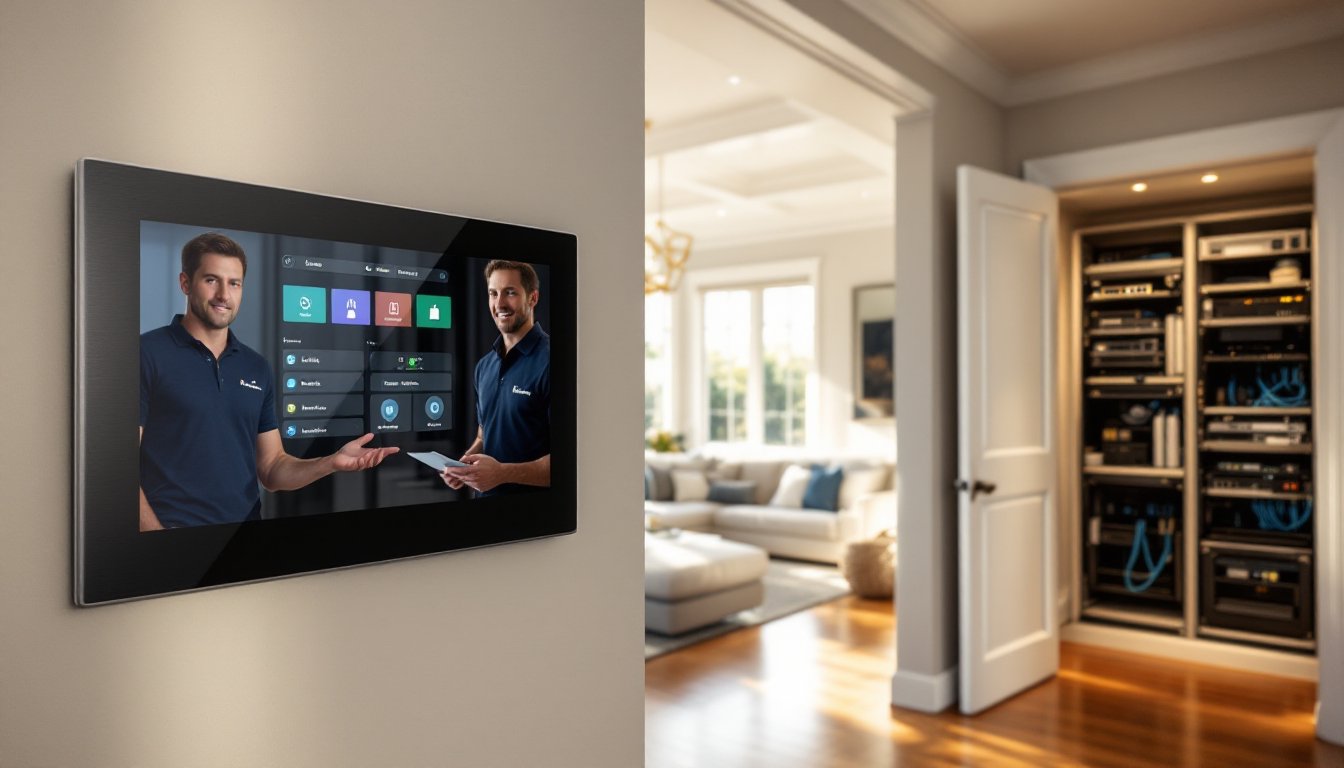
Crestron is a commercial-grade home automation platform designed for whole-house control. Unlike consumer-level systems like Google Home or Amazon Alexa, Crestron uses a centralized processor (often rack-mounted in a utility closet or basement) to manage lighting, climate, audio/video, shades, security, and more from a single interface.
The system communicates over hardwired and wireless protocols, including Ethernet, Zigbee, and proprietary Crestron networks. This allows for faster response times, greater reliability, and the ability to scale from a single room to a 20,000-square-foot estate without performance hiccups.
Crestron isn’t a DIY platform. It requires professional programming to configure devices, create custom user interfaces (touchscreens, keypads, mobile apps), and integrate with third-party equipment like home theaters, distributed audio systems, and motorized window treatments. That programming is what sets Crestron apart, and what drives up the cost.
Most Crestron systems are installed during new construction or major renovations, when running Cat6 cables, speaker wire, and control wiring is easier. Retrofit installations are possible but typically cost more due to added labor for fishing cables through existing walls.
Average Crestron System Costs by Home Size
Crestron pricing scales with square footage, number of zones, and feature complexity. Here’s what to expect in 2026 for typical residential installations:
- Small system (1–2 rooms, basic lighting and AV control): $10,000–$25,000. This might include a single-room home theater with automated lighting, shades, and a Crestron touchscreen.
- Mid-size system (whole-home lighting, climate, and multi-room audio): $40,000–$80,000. Covers a 2,500–4,000 sq ft home with integrated control of HVAC zones, distributed audio, motorized shades, and networked lighting.
- Large system (luxury whole-home automation): $100,000–$250,000+. Typical for homes over 5,000 sq ft with advanced features like surveillance integration, pool/spa control, outdoor audio/video, and custom user interfaces on multiple touchscreens and tablets.
These ranges include hardware, installation labor, and programming. If you’re adding Crestron to an existing home without pre-wired infrastructure, expect costs to trend toward the higher end of each range. New construction installs are generally more cost-effective because low-voltage wiring is run alongside electrical and HVAC rough-ins.
Keep in mind that general home automation budgets vary widely depending on the platform and scope of work.
Breaking Down Crestron Equipment and Installation Expenses
Hardware Components and Pricing
Crestron systems are built around modular components. Here’s a breakdown of typical hardware costs:
- Processors and controllers: $2,000–$8,000. The brain of the system. Entry-level processors (like the Crestron Home series) start around $2,000, while flagship models with more processing power and integration options run $5,000–$8,000.
- Touchscreens and keypads: $1,200–$3,500 per device. Wall-mounted touchscreens range from 7-inch models ($1,200–$1,800) to 10-inch or larger units ($2,500–$3,500). Keypads with custom engraving cost $400–$800 each.
- Lighting control (dimmers, switches, and modules): $150–$400 per dimmer or switch. A typical home might need 20–50 controlled circuits, adding $3,000–$20,000 just for lighting hardware.
- Motorized shades and integration modules: $300–$1,200 per shade (hardware only). Crestron integrates with brands like Lutron and Somfy, requiring interface modules ($500–$1,500 per system).
- Audio/video distribution equipment: $2,000–$15,000+. Includes matrix switchers, streaming endpoints, and multi-zone amplifiers. A six-zone audio system might cost $8,000–$12,000 in hardware alone.
- Sensors, door locks, and climate interfaces: $100–$600 per device. Occupancy sensors, contact sensors, and smart thermostats add incremental costs.
Expect 10–15% of your total budget to go toward miscellaneous items like Ethernet switches, rack enclosures, power conditioners, and cable management accessories. Professional installations often include a detailed breakdown of equipment expenses in the proposal.
Professional Programming and Labor Costs
Crestron dealers and integrators typically charge in two ways:
- Hourly programming rates: $100–$200/hour. Custom programming for user interfaces, scene creation, and device integration can take 20–100+ hours depending on system complexity.
- Fixed project pricing: Many dealers quote a turnkey price that bundles hardware, installation labor, and programming. This simplifies budgeting but may limit flexibility if you want to add features mid-project.
Installation labor (running cables, mounting devices, terminating connections) usually costs $75–$150/hour per technician. A mid-size system might require 40–80 hours of installation time, totaling $3,000–$12,000 in labor alone.
Ongoing service and support contracts are common with Crestron. Expect to pay $500–$2,000 annually for remote support, software updates, and priority service calls. Some integrators include the first year in the initial project cost.
One advantage of Crestron’s professional approach: the system is commissioned and tested before handoff. You’re not troubleshooting connectivity issues or reading manuals, everything works before the installer leaves.
Factors That Impact Your Total Crestron Investment
Several variables can push your Crestron costs up or down:
New construction vs. retrofit: Running wiring during framing is far cheaper than fishing cables through finished walls. If you’re retrofitting, budget an extra 20–40% for installation labor.
Number of controlled zones and devices: Each additional room, lighting circuit, or AV zone adds hardware and programming time. A 10-zone audio system costs significantly more than a 4-zone setup.
Custom programming and UI design: Stock Crestron interfaces work fine, but custom graphics, personalized button layouts, and advanced automation logic (like “goodnight” scenes that lock doors, arm security, and adjust thermostats) increase programming hours.
Third-party integrations: Crestron plays well with most high-end brands, but integrating disparate systems (older AV gear, proprietary HVAC controls, commercial-grade security) may require additional modules or custom drivers, each adding $500–$2,000.
Geographic location: Labor rates vary. Expect higher costs in major metro areas (New York, San Francisco, Los Angeles) compared to smaller markets. Availability of certified Crestron dealers also affects pricing, limited competition can drive rates up.
Future-proofing: Running extra Cat6 drops, conduit for future upgrades, or opting for higher-capacity processors can add 10–15% to upfront costs but save money down the road. Many homeowners running smaller automation projects regret not over-wiring during initial construction.
Permits and code compliance: Some jurisdictions require electrical permits for low-voltage work, especially if integrating with existing electrical panels or installing new dedicated circuits for AV equipment. Factor in $200–$800 for permit fees and inspections.
Is Crestron Worth the Cost Compared to Alternatives?
Crestron isn’t for everyone. Here’s how it stacks up against other platforms:
Crestron vs. Control4: Control4 offers similar whole-home integration at roughly 30–50% less cost. It’s still dealer-installed and professionally programmed but uses less expensive hardware. Crestron edges ahead in scalability, customization, and rock-solid reliability, critical for large homes or commercial applications.
Crestron vs. Savant: Savant competes directly with Crestron in the luxury market, often at comparable pricing. Savant’s interface is more consumer-friendly (Apple-inspired design), while Crestron offers deeper customization and broader third-party compatibility.
Crestron vs. DIY platforms (SmartThings, Home Assistant): DIY systems cost a fraction of Crestron, often under $2,000 for a full-home setup. But they require ongoing tinkering, lack professional support, and can’t match Crestron’s performance in complex multi-zone AV or lighting scenarios. Homeowners comfortable with DIY automation examples may prefer the flexibility and lower cost, while those wanting a turnkey solution lean toward Crestron.
Crestron makes sense if:
- You value reliability and performance over cost savings.
- Your home has complex integration needs (whole-house audio, advanced lighting scenes, commercial-grade AV).
- You want a system that will last 10–15+ years with minimal obsolescence (Crestron processors from 2010 are often still in service).
- You’re building new or doing a major renovation, making wiring costs manageable.
Crestron is overkill if:
- You’re automating just a few devices (smart bulbs, a doorbell, a thermostat).
- Budget is tight and you’re comfortable managing software updates and troubleshooting.
- You prefer the flexibility to swap out devices or platforms every few years.
Most homeowners exploring high-end automation also consider regional factors. For example, those researching smart home options in Houston or automation in Tucson often weigh Crestron against local integrator recommendations and climate-specific needs like advanced shade control or zoned HVAC.
For a deeper look at how Crestron performs in real-world use, independent reviews highlight both the system’s strengths and price considerations in detail. Similarly, comprehensive cost guides break down what homeowners can expect across different installation tiers.
Bottom line: Crestron delivers exceptional performance and longevity, but the investment only makes sense if those priorities align with your needs and budget. If you’re unsure, consult with a certified Crestron dealer for a site survey and detailed proposal. Most offer free consultations and can help determine whether a full Crestron system, or a hybrid approach using alternatives like Elan, fits your project best.