Salt Lake City’s extreme temperature swings, from summer highs near 100°F to winter lows dipping below 20°F, put serious stress on home windows. Add in the valley’s occasional windstorms and the city’s hard water that leaves mineral deposits on glass, and it’s no surprise that windows wear out faster here than in milder climates. Whether homeowners are dealing with drafty frames, condensation between panes, or single-pane relics from the ’70s, replacement windows offer measurable energy savings and improved comfort. This guide covers local costs, ideal window types for the Wasatch Front, project timing, and whether to tackle installation solo or hire a pro.
Table of Contents
ToggleKey Takeaways
- Window replacement in Salt Lake City can cut annual utility bills by $200–$400 by eliminating drafty windows that waste 25–30% of heating and cooling energy in older homes.
- Most window replacement projects run $6,500–$10,000 for a typical 10–12 window ranch home, with vinyl double-hung windows averaging $450–$750 per window installed and custom sizes adding 20–40% to base costs.
- Low-E coatings with low solar heat gain coefficient (SHGC below 0.30) for south and west-facing windows are essential for managing Salt Lake City’s extreme temperature swings and intense summer sun.
- Schedule window replacement between late spring and early fall (May–October) to ensure proper curing of installation adhesives and sealants, as winter temperatures below 40°F can compromise installation quality.
- Verify that window contractors hold general liability insurance (minimum $1 million) and workers’ compensation coverage, and obtain three written bids that itemize window specifications, installation method, and scope of work.
- For most homeowners, professional installation is worthwhile for full-frame window replacement since flashing mistakes and out-of-square frames can cause water intrusion and energy waste, though insert replacement is more DIY-friendly.
Why Salt Lake City Homeowners Replace Windows
Most window replacement projects in Salt Lake City are driven by three factors: energy bills, visible damage, and resale value. Old windows lose conditioned air faster than any other building envelope component except an open door. Homeowners with single-pane glass or aluminum frames from the 1980s often notice temperature differences of 5–10°F near windows during winter months.
Visible condensation between double-pane glass indicates seal failure. Once that argon or krypton gas escapes, the window’s R-value drops to nearly that of single-pane glass. Rot around wooden frames, difficulty opening sashes, or cracked muntins are also common triggers for replacement. For homes built before 1978, lead paint on old window frames adds a safety concern during removal.
Resale value plays a role too. Window replacement consistently ranks among the top ten home improvements for return on investment in the Intermountain West region, typically recovering 70–80% of project cost at sale.
Climate Challenges and Energy Efficiency
Salt Lake City sits at 4,226 feet elevation in a high-desert climate zone (IECC Zone 5B). Winter heating loads dominate, but summer cooling isn’t negligible, afternoon sun through west-facing windows can spike indoor temperatures by 15°F without adequate glazing.
Low-E coatings are essential. A low-emissivity coating reflects infrared heat back into the home during winter and blocks solar heat gain in summer. For south- and west-facing windows, specify a low solar heat gain coefficient (SHGC below 0.30) to reduce air conditioning costs. North- and east-facing windows benefit from higher SHGC (0.35–0.45) to capture passive solar warmth.
U-factor measures heat transfer through the entire window assembly. Aim for U-factor of 0.30 or lower to meet ENERGY STAR’s Most Efficient criteria for the Northern climate zone. Double-pane windows with argon fill and warm-edge spacers hit this mark easily: triple-pane units can achieve U-factors as low as 0.15 but add cost and weight.
Drafty windows waste an estimated 25–30% of heating and cooling energy in older Salt Lake City homes. Replacing them can cut annual utility bills by $200–$400 depending on home size and current window condition.
Average Window Replacement Costs in Salt Lake City
Material and labor costs vary widely based on window type, frame material, and installation complexity. As of 2026, expect these ranges for full-frame replacement (including removal of old window and trim work):
- Vinyl double-hung windows: $450–$750 per window installed
- Fiberglass casement windows: $600–$950 per window installed
- Wood-clad double-hung or casement: $800–$1,400 per window installed
- Sliding windows (vinyl or aluminum): $400–$700 per window installed
- Picture windows (fixed): $350–$600 per window installed
These figures assume standard sizes (30″–36″ wide, 48″–60″ tall). Custom sizes, specialty shapes (arched, octagon), or structural modifications to rough openings add 20–40% to base cost.
For a typical Salt Lake City ranch home with 10–12 windows, a full replacement project using mid-grade vinyl or fiberglass windows runs $6,500–$10,000 installed. Historic homes in the Avenues or Sugar House with original wood windows and non-standard sizes can easily hit $15,000–$20,000.
Permits: Salt Lake City requires a building permit for window replacement if the rough opening size changes or if structural headers need modification. Permit fees run $50–$150. Most like-for-like replacements (insert windows or same-size full-frame units) don’t trigger permit requirements, but check with the city’s Building Services Division before starting work.
Regional price factors: Labor rates in Salt Lake County average $75–$95 per hour for licensed window installers. Material costs are roughly 10–15% higher than national averages due to freight from West Coast suppliers. Homeowners researching contractor pricing should request at least three written bids and verify each contractor carries general liability insurance and workers’ comp coverage.
Best Window Types for Salt Lake City Homes
Vinyl windows dominate the local market for good reason: they’re affordable, require zero maintenance, and perform well in dry climates. Fusion-welded corners resist air infiltration better than mechanically fastened frames. Look for multi-chambered extrusions (three or more chambers) for better insulation and structural rigidity. Vinyl doesn’t rot or need paint, but dark colors can warp under intense summer sun, stick with white, tan, or light gray.
Fiberglass windows outperform vinyl in strength and dimensional stability. They’re pricier but worth considering for large openings (over 48″ wide) where vinyl frames might flex. Fiberglass expands and contracts at nearly the same rate as glass, reducing seal stress and extending the life of the insulated glass unit. They accept paint, so color-matching historic home exteriors is easier.
Wood-clad windows pair a low-maintenance exterior (aluminum or vinyl) with traditional wood interiors. They’re the go-to for historic districts where design review boards mandate authentic appearance. Expect to re-stain or repaint interior sashes every 8–12 years. Brands like Andersen and Pella dominate this category.
Aluminum windows are rare in new residential construction but common in mid-century modern homes. They conduct heat rapidly (high U-factor), making them a poor choice for energy efficiency unless fitted with thermal breaks. Reserve aluminum for specialty applications like large picture windows where narrow sightlines matter more than insulation.
Operation style: Double-hung windows suit traditional architecture and allow top-sash ventilation. Casement windows seal tighter when closed (the sash compresses against weatherstripping rather than sliding past it) and catch cross-breezes better. Sliding windows work well in tight spaces where outward-swinging casements would block walkways. Fixed picture windows offer maximum glass area and best energy performance since there are no operable seals to fail.
For window replacement in Utah’s climate, prioritize argon-filled double-pane units with low-E² or low-E³ coatings and warm-edge spacers (foam or composite, not aluminum). Triple-pane windows make sense for north-facing bedrooms or media rooms where noise reduction matters, but the added cost rarely pays back in energy savings alone.
When to Schedule Your Window Replacement Project
Late spring through early fall (May–October) offers the best weather for window replacement in Salt Lake City. Installers can work comfortably, and homeowners won’t lose heat through open rough openings during work. Most professional crews can replace 8–10 standard windows in a single day, but weather delays are less likely when you avoid winter months.
Avoid winter installs if possible. Removing windows in January exposes the home’s interior to sub-freezing air, and installation adhesives and caulks don’t cure properly below 40°F. If emergency replacement is necessary during winter (broken glass, failed seal causing ice buildup), use cold-weather sealants and plan for one window at a time to minimize heat loss.
Lead times matter. Off-the-shelf vinyl windows from big-box stores can be available same-day, but custom sizes or higher-end fiberglass and wood-clad units often require 6–10 weeks from order to delivery. Professional installers book up 4–8 weeks in advance during peak season (June–August). Homeowners considering professional installation should start the quoting process in March or April for summer installation.
Air quality considerations: Salt Lake City’s winter inversions trap particulates in the valley, sometimes triggering “red air” days. Avoid scheduling work during these periods if anyone in the household has respiratory sensitivities, dust and debris from demolition can worsen indoor air quality.
DIY vs. Professional Installation: What to Consider
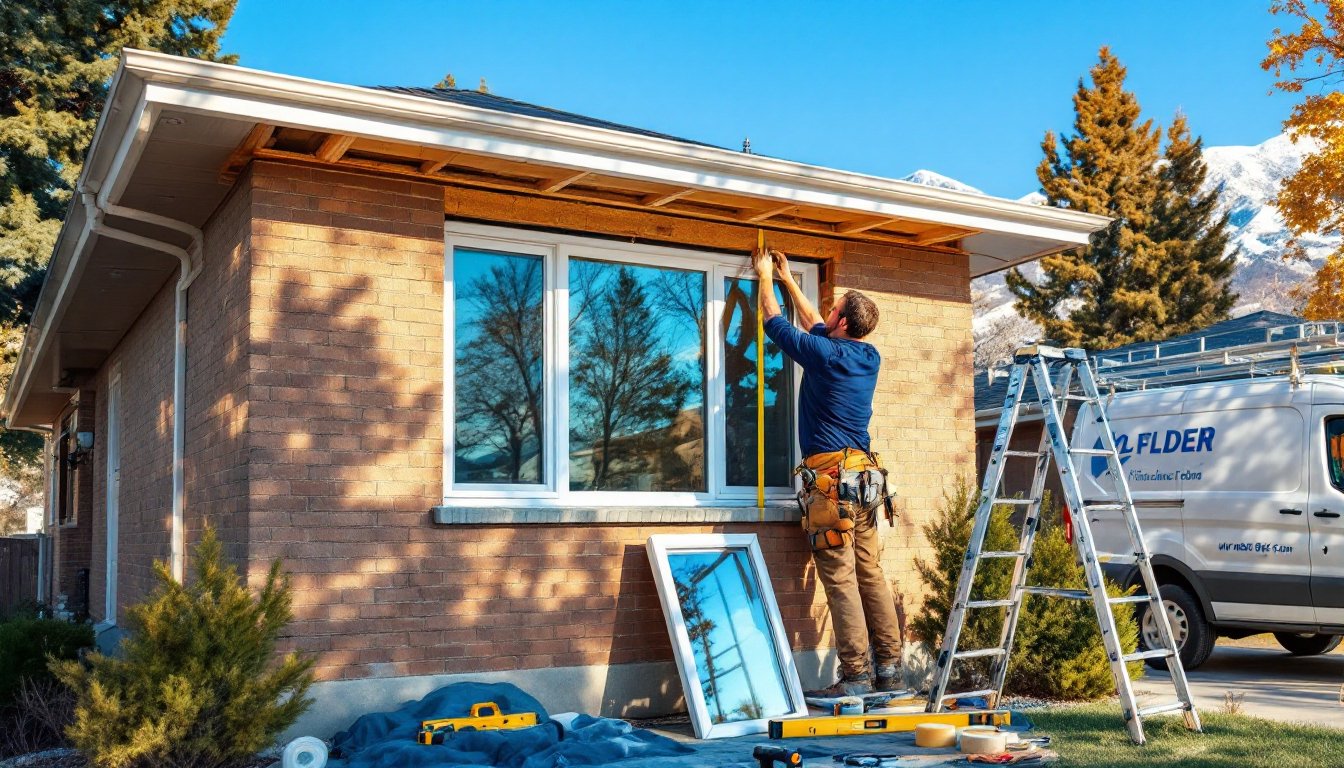
Full-frame window replacement is advanced DIY territory. It requires removing interior and exterior trim, cutting through nails or screws securing the old frame to wall framing, shimming and leveling the new unit in the rough opening, insulating gaps, flashing the exterior to shed water, and reinstalling or replacing trim. Miss a step, especially flashing details, and water intrusion can rot wall sheathing within a year.
Tools needed for DIY full-frame install:
- Reciprocating saw or oscillating multi-tool (to cut fasteners)
- 4-foot level and shims (critical for square, level, plumb installation)
- Caulk gun and polyurethane sealant
- Hammer, pry bar, utility knife
- Drill/driver with assorted bits
- Insulating foam (low-expansion formulation to avoid bowing frames)
- Exterior flashing tape or peel-and-stick membrane
Expect 3–5 hours per window for a first-timer. Mistakes are costly: an out-of-square window won’t operate smoothly, and gaps larger than 1/4″ around the frame waste energy even after insulating.
Insert (pocket) replacement is more DIY-friendly. The old sashes come out, but the existing frame stays in place. The new window unit slides into the opening and screws to the old jambs. No exterior work, no flashing, minimal trim disturbance. Downside: the new unit is slightly smaller than the original glass area (you lose 1–2″ of visible glass), and you’re building on top of an old frame that might not be square.
When to hire a pro:
- Structural modifications (enlarging openings, adding headers)
- Second-story or higher installations (fall hazard)
- Historic homes where trim must be preserved and reinstalled
- Any project requiring a permit (most jurisdictions won’t issue permits to unlicensed homeowners for structural work)
- Lack of experience with flashing and weatherproofing details
Professional installation typically includes a warranty on labor (1–5 years) plus to the manufacturer’s warranty on the window itself. That peace of mind is worth the added cost for most homeowners. For guidance on weighing options, DIY project resources can clarify when to call in help.
Choosing the Right Window Contractor in Salt Lake City
License and insurance come first. Utah doesn’t require a specialty window contractor license, but reputable installers carry a general contractor or residential remodeler license. Verify active status through the Utah Division of Occupational and Professional Licensing (DOPL). Confirm the contractor holds general liability insurance (minimum $1 million) and workers’ compensation coverage. If a worker is injured on the job and the contractor lacks workers’ comp, the homeowner’s insurance may be liable.
Get three written bids. Each should itemize window specifications (brand, model, glass package, frame color), installation method (full-frame or insert), removal and disposal of old windows, trim work, flashing, insulation, and any structural repairs. Vague line items like “window replacement, per opening” make it impossible to compare quotes fairly.
Ask these questions:
- How long have you been installing windows in Salt Lake City?
- Will you pull permits if required?
- What’s your typical lead time from contract signing to installation?
- Do you subcontract the work or use your own crew?
- What warranty do you offer on labor? (Separate from manufacturer’s warranty)
- Can you provide three local references from projects completed in the past year?
Red flags:
- Pressure to sign same-day or limited-time “special pricing”
- No physical business address (P.O. box only)
- Request for full payment upfront (standard is 30–50% deposit, balance on completion)
- Reluctance to provide proof of insurance
- No written contract or vague scope of work
Timing and deposits: Expect a 30–50% deposit when ordering custom windows. The balance is due upon satisfactory completion and final walkthrough. Never pay in full before installation is complete and you’ve verified that windows operate smoothly, weatherstripping is intact, and all trim is finished.
Material selection: A good contractor will walk homeowners through glass packages and frame options without pushing the most expensive choice. If the sales pitch focuses on rebates and financing instead of U-factor, SHGC, and appropriate glass coatings for the home’s orientation, keep looking. Energy performance should drive window selection, not payment plans.